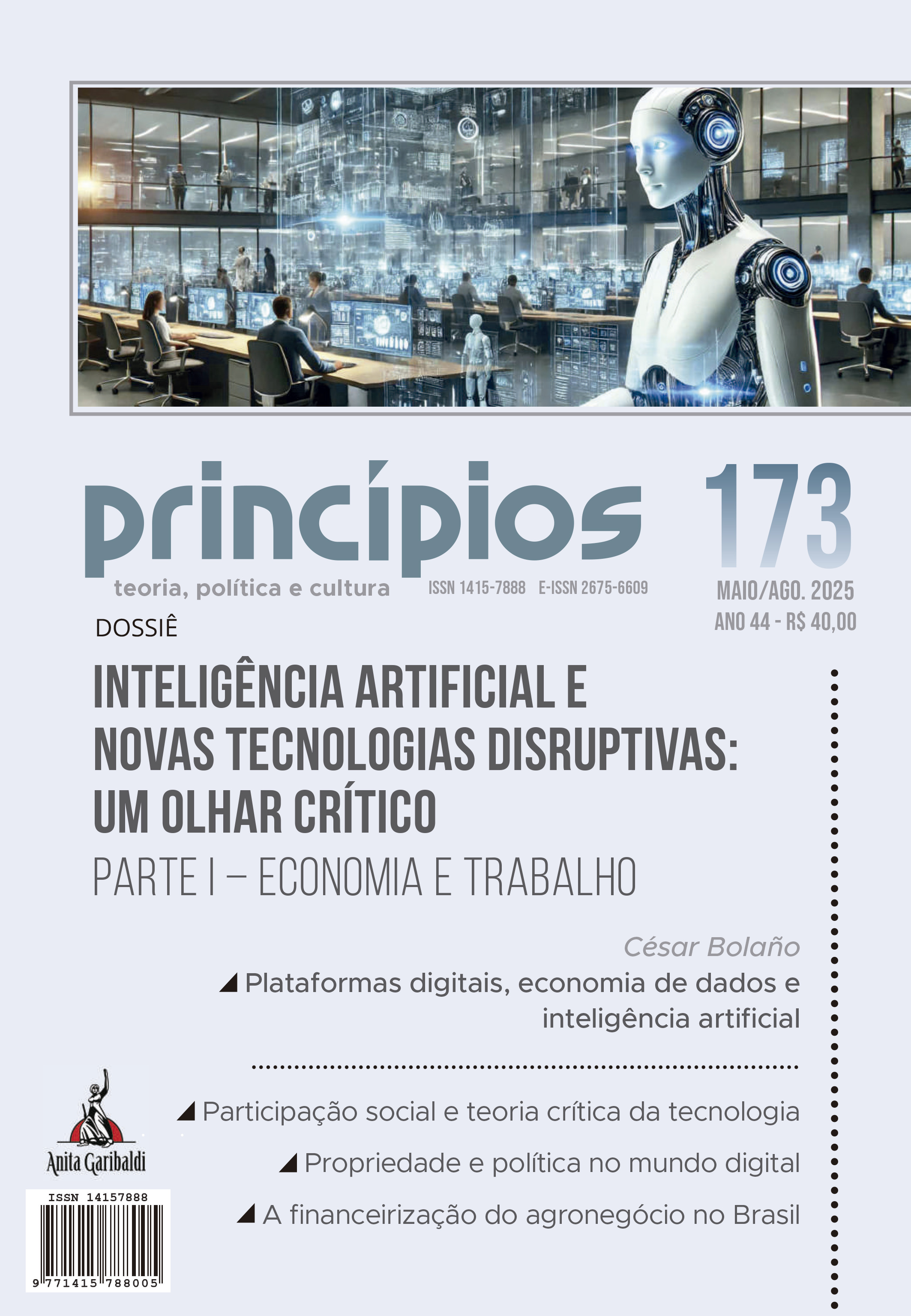
A perspectiva analítica da teoria do valor trabalho para compreensão dos desafios de um plano nacional de inteligência artificial
Keywords:
Teoria do Valor trabalho, Inteligência Artificial, PBIAAbstract
The article analyzes the challenges and implications of the Brazilian Artificial Intelligence Plan (PBIA 2024-2028) in light of Marx's Labor Theory of Value (LTV), exploring how the technological transformations of the Fourth Industrial Revolution reconfigure the production of value, the exploitation of labor, and the strategies necessary to democratize the benefits of AI in Brazil. It highlights that, although AI has the potential to reshape economic and social sectors, its implementation requires a critical approach regarding how human labor remains central to the creation of value, even in a context of growing automation and digitization.
The PBIA aims to position Brazil at the forefront of AI development, with significant investments in infrastructure, educational training, and scientific research. However, the risks of concentrating technological power in the hands of large global corporations could deepen social and technological inequalities. To mitigate these asymmetries, the plan proposes the creation of a robust national base of knowledge and technology, emphasizing the training of qualified human resources from basic education to postgraduate studies, as well as strengthening interdisciplinary research centers.
While AI has the potential to increase productivity and generate disruptive innovations, it also intensifies forms of labor exploitation, especially within the platform economy and the precarization of work. Furthermore, the importance of integrating ethical and solidarity principles into AI development is emphasized, ensuring that technology serves the common good and not only the interests of monopolistic capital.
Downloads