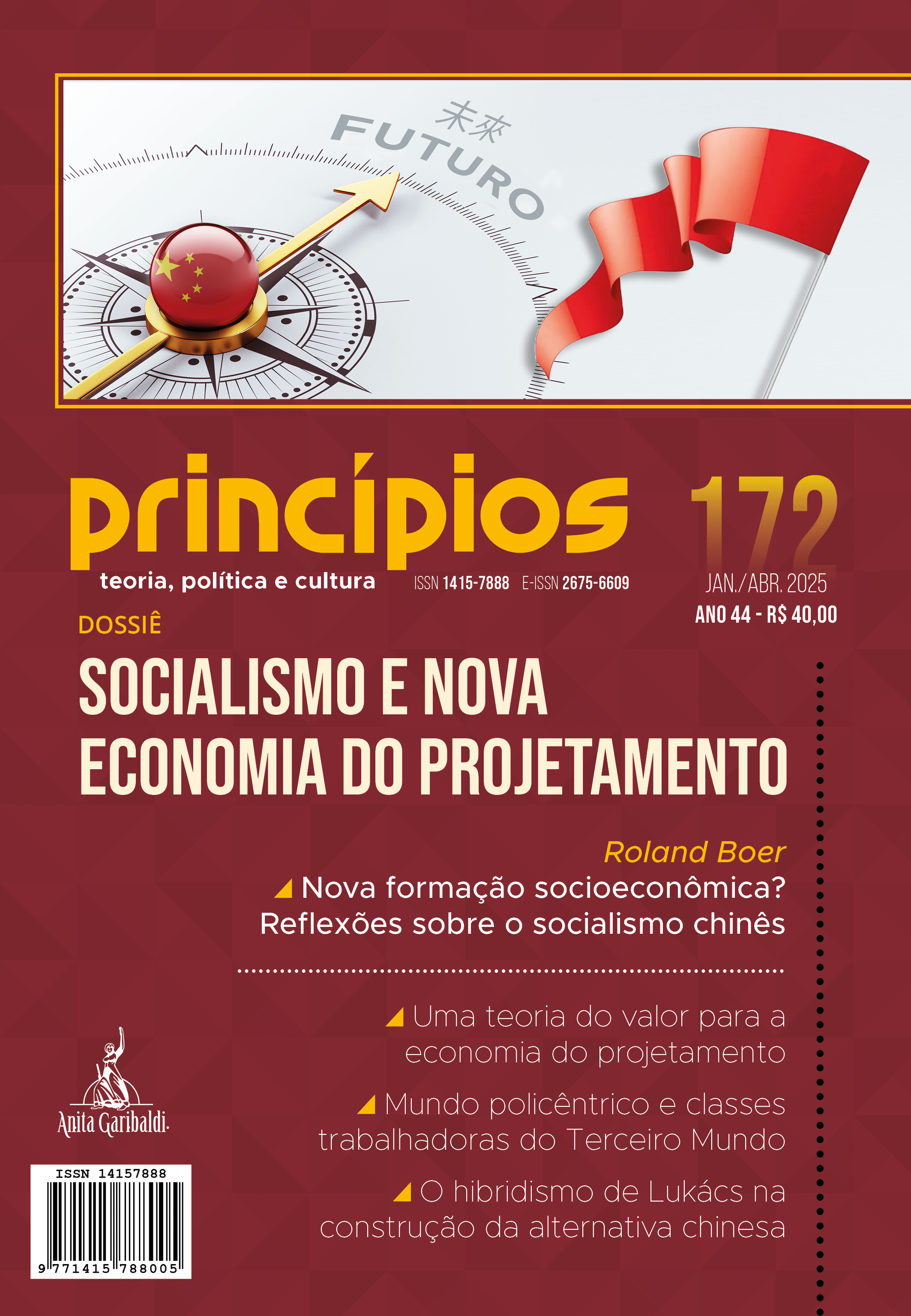
A revolução chinesa: entre as estruturas e a inexistente libertação
Keywords:
Chinese Revolution, Badiou, Althusser, Mao Tse-Tung, Mode of ProductionAbstract
In this article, we propose to analyse the Chinese revolution (1949) based on a theoretical framework consisting of an irreconcilable dialectics between althusserian marxist theory and Alain Badiou's theory of event. More specifically, we begin affirming the thesis that imperial China was constituted by a set of social formations dominated by a tributary mode of production that, during the period of imperialist domination, was coupled with the capitalist mode of production. This is followed by an analysis of the impediments to Chinese liberation generated by this set of structures and how this liberation had to take the form of an event that began with the May 4th movement and unfolded in the founding of the Chinese Communist Party and the establishment of the People's Army.
Downloads