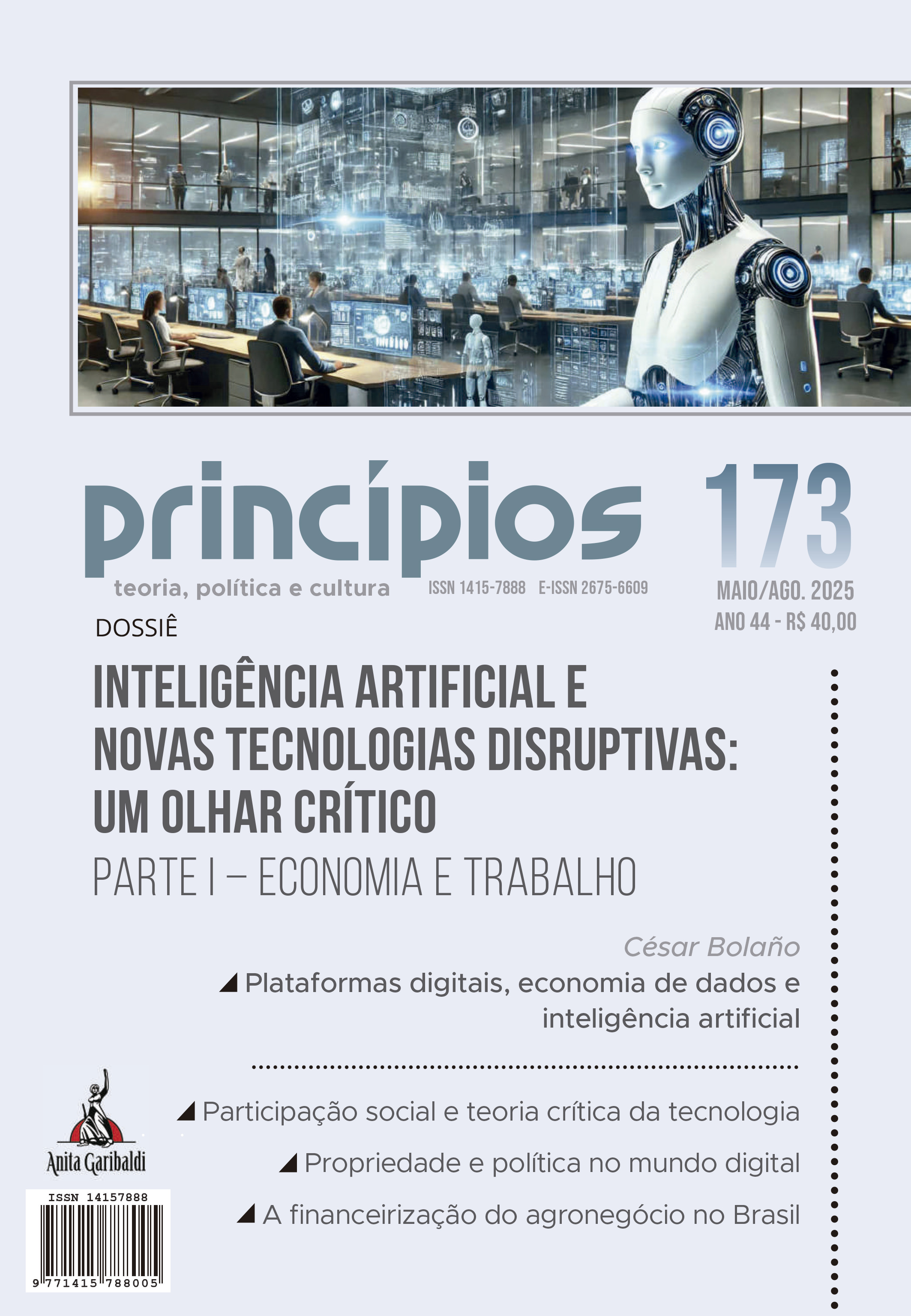
A natureza disruptiva da inteligência artificial no mundo do trabalho
DOI:
https://doi.org/10.14295/principios.2675-6609.2025.173.005Palavras-chave:
Teoria crítica da tecnologia, Plataformização, Inteligência artificial, Trabalho, Simbiose humano-máquinaResumo
Este artigo tem o propósito de contribuir para o debate da inteligência artificial no mundo do trabalho com base em estudos epistemológicos. Compreender as potencialidades e os limites das diferentes tecnologias disruptivas, tais como a inteligência artificial, torna-se fundamental para realizar uma discussão coerente sobre as mudanças e transformações no emprego do futuro, bem como sobre o efeito (fenômeno) da inteligência artificial no mundo do trabalho sob a perspectiva da teoria crítica da tecnologia. A metodologia ado- tada envolve pesquisa bibliográfica que articula contribuições de autores vinculados a essa teoria, como Andrew Feenberg, Marteen Verkerk, Cláudia Araújo e Jerônimo Portes, e de estudiosos da inteligência artificial, como Lúcia Santaella e Dora Kaufman, esta- belecendo ainda aproximações com o mundo do trabalho a partir das contribuições de Klaus Schwab, Kai-Fu Lee e Chen Qiufan. A partir da análise da teoria crítica da tecnologia, identificamos que nas profissões de perfil associal e criativo, a IA desempenha um papel ambivalente. Por um lado, pode automatizar tarefas repetitivas, possibilitando que profissionais criativos se concentrem em aspectos mais subjetivos e inovadores. Por outro, reforça desigualdades em contextos precarizados, de baixa proteção trabalhista e renda instável, nos quais a ausência de controle, acesso e regulação intensifica formas de dependência e exclusão. Estamos perante uma simbiose entre as capacidades humanas e as da IA, caracterizando a reconfiguração do trabalho com a finalidade de colaboração de forma integrada.
Downloads